Building a Smarter Advertising System with Multi-Agent AI
Learn how to design and implement a multi-agent AI architecture for smarter advertising, from defining agent roles to orchestrating real-time collaboration.
Introduction
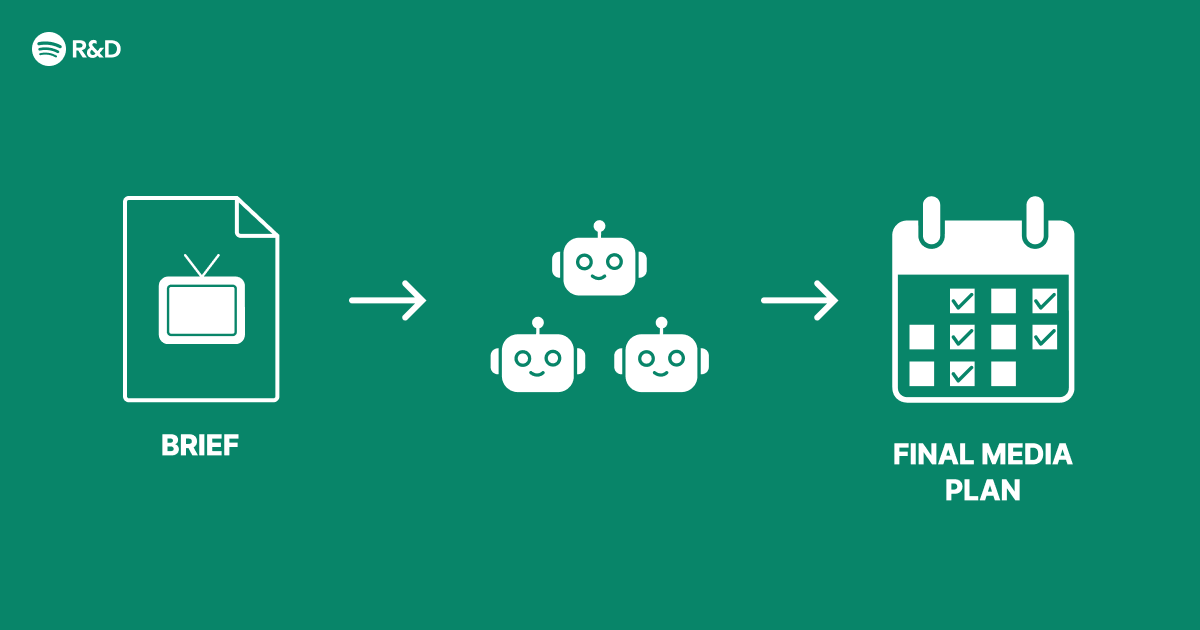
In today's competitive digital landscape, traditional advertising approaches often fall short when it comes to delivering highly relevant, personalized ads at scale. The solution lies in a multi-agent architecture—where multiple specialized AI agents collaborate to optimize every step of the advertising pipeline. This guide walks you through how to design and implement such a system, drawing on real-world engineering principles used by leading platforms. Whether you're a data scientist, engineer, or product manager, you'll learn how to harness the power of collaborative AI to make your advertising smarter, more efficient, and more effective.
What You Need
Before you begin, ensure you have the following in place:
- Data infrastructure: A scalable data lake or warehouse (e.g., AWS S3, Google BigQuery) storing historical ad impressions, clicks, conversions, and user behavior logs.
- Machine learning frameworks: Python environment with TensorFlow, PyTorch, or scikit-learn; plus libraries like Pandas, NumPy, and joblib for data processing and model serialization.
- Orchestration tool: A system to manage agent workflows—options include Apache Airflow, Kubeflow, or even a custom event-driven framework.
- Computing resources: GPU/TPU acceleration for training deep learning agents, plus sufficient CPU memory for real-time inference.
- Targeting criteria: Clear definitions of advertiser goals (e.g., maximize conversion, minimize cost per acquisition) and audience segments.
- Feedback loops: A mechanism to capture real-time performance data (clicks, conversions) and feed them back to the agents for continuous learning.
Step-by-Step Guide to Implementing a Multi-Agent Advertising Architecture
Step 1: Define Your Agent Roles and Objectives
Start by identifying the distinct tasks within your advertising pipeline that can be automated through intelligence. Typical agents include:
- Audience Agent: Analyzes user profiles and browsing history to segment audiences and predict interest in different ad categories.
- Bidding Agent: Determines optimal bid amounts for ad placements in real-time auctions, balancing budget constraints and performance goals.
- Creative Agent: Personalizes ad copy, images, or videos based on user context and past engagement.
- Placement Agent: Decides where (which websites, apps, or inventory slots) to serve each ad to maximize relevance and impact.
For each agent, define clear success metrics (e.g., lift in click-through rate, reduction in cost per acquisition). Document how agents will communicate—typically through shared state like a vector of features, current campaign constraints, or a blackboard architecture where agents write and read from a common data structure.
Step 2: Design the Inter-Agent Communication Protocol
Agents must exchange information without bottlenecks. Choose a lightweight messaging system (e.g., Redis Pub/Sub, Kafka topics). Define message formats (JSON or Protobuf) that include agent ID, timestamp, confidence scores, and any recommended actions. For instance, the Audience Agent outputs a list of top-100 eligible users with predicted intent scores; the Bidding Agent reads this and assigns bids accordingly. Set timeout policies to prevent agents from waiting indefinitely. Use a coordinator agent (or a deterministic scheduler) to sequence tasks: audience segmentation first, then bidding, then creative selection, then placement.
Step 3: Build and Train Individual Agents
Each agent should be a specialized model. For the Audience Agent, train a collaborative filtering model or a deep neural network on user-ad interaction data. For the Bidding Agent, use a reinforcement learning approach (e.g., a Q-network that learns to bid under budget constraints). The Creative Agent can leverage a multimodal transformer (like CLIP) to match ad assets to user embeddings. The Placement Agent might be a gradient-boosted decision tree predicting site engagement. Train models on historical logs; use offline evaluation (e.g., A/B testing with held-out data) to validate each agent's performance independently.
Step 4: Implement the Orchestration Layer
Create a central coordinator that triggers agent actions. In a real-time scenario, when a user visits a page, the following sequence should fire:
- Placement Agent receives the impression opportunity and sends user context to the Audience Agent.
- Audience Agent returns a set of candidate ad categories and user interest scores.
- Creative Agent selects the best ad variant for that user.
- Bidding Agent calculates the bid price based on predicted conversion probability and budget.
- The coordinator assembles the final ad request (with bid, creative, and placement) and submits it to the ad exchange.
Use a microservices architecture (e.g., Docker, Kubernetes) to scale each agent independently. Add health checks and fallback logic: if an agent fails to respond in time, the coordinator uses a default policy (e.g., cheapest bid, generic creative).

Step 5: Integrate Real-Time Feedback Loops
After each ad is served, capture user actions (impression, click, conversion, skip). Stream this data to a real-time analytics engine (e.g., Apache Flink, Spark Streaming). Update each agent's online learning component—for instance, the Bidding Agent can adjust its policy using the difference between predicted and actual conversion rate. For the Audience Agent, incorporate new interactions into its user embeddings via incremental matrix factorization. Ensure that feedback is attributed correctly to the agent that made the decision; you can log decision IDs that tie back to the specific agent outputs.
Step 6: Monitor and Iterate
Set up dashboards (e.g., Grafana, Tableau) to track overall key performance indicators (KPIs) like cost per mille (CPM), return on ad spend (ROAS), and user satisfaction. For each agent, monitor drift in model predictions, response latency, and error rates. Establish a governance process: once a week, review agent performance and consider retraining models if metrics degrade beyond a threshold (e.g., 5% drop in CTR). Run A/B tests comparing your multi-agent system against a baseline (e.g., single reinforcement learning agent) to quantify the improvement.
Tips for Success
- Start with a simplified version: If you're new to multi-agent systems, begin with two agents (e.g., Audience + Bidding) and expand gradually. Simplicity reduces debugging complexity.
- Use simulation environments: Tools like RecSim (from Google) or custom gym environments allow you to test agent interactions without impacting live traffic.
- Balance specialization vs. redundancy: Avoid overlapping responsibilities. Each agent should have a clear, bounded scope to prevent conflicts or duplicated effort.
- Invest in data governance: Because agents generate and consume data, ensure you have strong versioning for models, features, and training data to reproduce outcomes.
- Consider privacy-first design: Federate agent training across user groups or use differential privacy to protect user data, especially when personalizing ads.
- Plan for cold start: When launching new campaigns or entering new markets, your agents may not have enough data. Use rule-based fallbacks or transfer learning from similar segments.
By following this guide, you can move from a monolithic ad system to a flexible, intelligent multi-agent architecture that adapts in real time. The payoff is more relevant ads, lower wasted spend, and a better experience for both advertisers and users.