Movable Qubits: Bridging the Gap Between Scalability and Connectivity
New research shows spin qubits in quantum dots can be physically moved without losing data, combining scalable manufacturing with any-to-any connectivity for error correction.
Quantum computing's success hinges on assembling large numbers of high-quality qubits that can be linked into error-corrected logical units. Currently, two primary strategies dominate: one embeds qubits in manufactured electronics for scalability, while the other uses natural atoms or photons for consistent behavior but with complex hardware. A key differentiator is movability—atoms and ions can be transported, enabling any-to-any entanglement, a boon for error correction. However, a new study on quantum dots offers a hybrid path: these manufacturable devices host a qubit as an electron's spin, and researchers have now demonstrated moving these spin qubits between dots without data loss, potentially combining bulk production with flexible connectivity.
Why are many high-quality qubits essential for quantum computing?
Quantum computers rely on qubits that can exist in superposition and entanglement. To perform complex calculations, you need a large number of them working together. However, individual qubits are prone to errors from environmental noise. The solution is to group them into error-corrected logical qubits, which use redundancy to fix mistakes. This requires dozens or even hundreds of physical qubits per logical one. Therefore, achieving practical quantum computing demands both high quality (low error rates) and massive scalability—manufacturing millions of reliable qubits. Without sufficient quantity and quality, computations will fail due to accumulated errors or insufficient computational power.
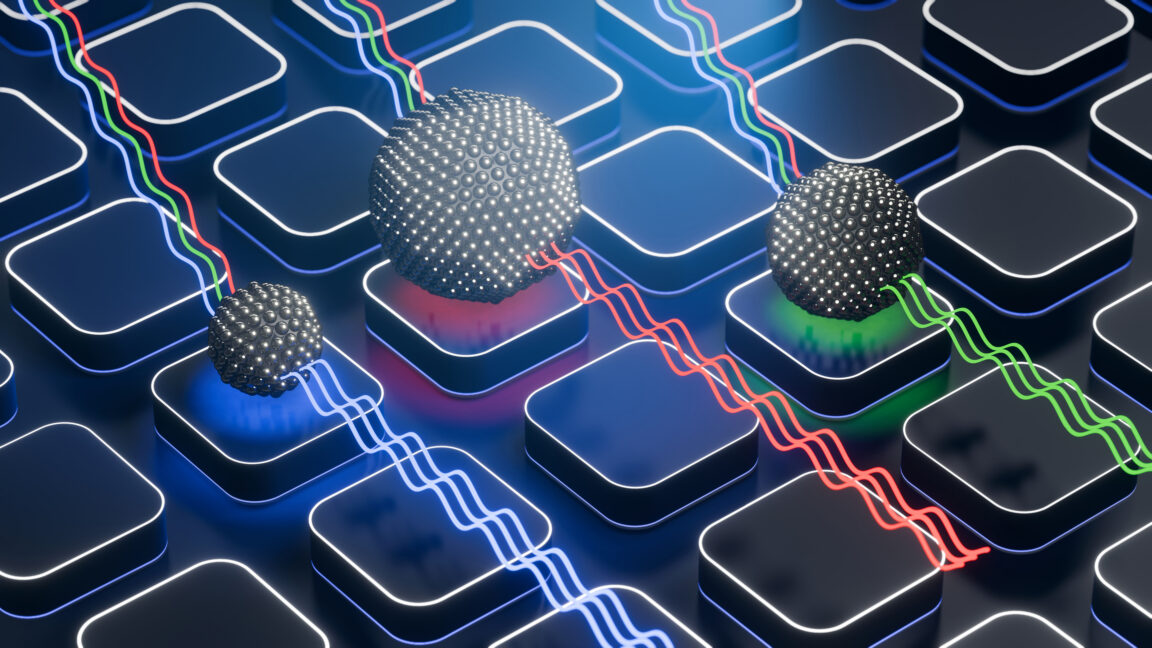
What are the two main approaches to building qubits?
Companies are roughly split into two camps. The first embeds qubits directly into manufactured electronics—like superconducting circuits or quantum dots—using semiconductor fabrication techniques. This allows mass production but locks qubits into fixed physical connections. The second approach uses natural systems such as atoms, ions, or photons as qubits. These offer more uniform behavior because each atom is identical, but they require complex laser and trap setups to hold and manipulate them. While the electronic route promises scalability, the atomic route provides superior coherence and the ability to physically move qubits, enabling flexible entangling of any pair.
What advantage does movability provide in atom- or ion-based qubits?
Physical movability is a game-changer for any-to-any connectivity. In atomic or ion trap systems, you can transport individual qubits to interact with any other qubit, not just nearest neighbors. This flexibility dramatically simplifies error correction and gate operations because you can directly entangle any two qubits without intermediate steps. It also allows reconfiguring the architecture on the fly, adapting to different algorithms. For example, you can isolate qubits during measurement or bring them together for two-qubit gates. This dynamic connectivity is a major reason atomic systems are favored despite their hardware overhead—they avoid the rigid wiring constraints of electronic qubits.
What is the key limitation of electronic qubits compared to atomic qubits?
Electronic qubits, such as those in superconducting circuits or quantum dots, are fabricated using lithography and fixed wiring. Once manufactured, their connections are locked in—qubits can only interact with their immediate neighbors. This nearest-neighbor connectivity imposes overhead for error correction and algorithms, often requiring many swap gates to move information between non-adjacent qubits. These extra operations increase error rates and runtime. While electronic qubits benefit from scalable manufacturing, their lack of physical movability forces complex routing. The new research on quantum dots aims to overcome this by enabling spin qubits to be shuttled between dots, offering a path to electronic qubits with the connectivity advantages of atomic systems.
What did the new research on quantum dots demonstrate?
A recent study published in a peer-reviewed journal showed that spin qubits hosted in semiconductor quantum dots can be physically moved from one dot to another without losing the quantum information encoded in the electron's spin. This is achieved by precisely controlling voltage pulses that shift the electron between adjacent dots in an array. Critically, the transfer maintained a high fidelity—the qubit's coherence was preserved during movement. This demonstration proves that quantum dots, which are inherently manufacturable using standard semiconductor processes, can now also offer the movability previously limited to atoms and ions. It opens the door to combining scalable fabrication with flexible, any-to-any qubit connectivity.
How does moving spin qubits help with error correction?
Error correction typically requires entangling many qubits in a specific pattern, often involving non-local interactions. With movable spin qubits, you can bring any two qubits together to perform a gate directly, avoiding the need for numerous swap operations. This reduces the number of gate steps, lowering error accumulation. Movability also allows for dynamic reconfiguration of the error-correction code, adapting to faulty qubits by moving data around. For example, if a particular dot becomes noisy, you can relocate its qubit to a fresh dot. These flexibilities significantly improve the performance of error correction, making it more practical with fewer physical qubits and lower overhead.
What is the significance of moving spin qubits without losing information?
The ability to transfer a spin qubit intact between quantum dots is a critical milestone. It means that manufacturable qubits can now emulate the connectivity advantages of atomic systems—something previously thought difficult. This breakthrough could lead to quantum processors that combine the best of both worlds: the scalability of silicon fabrication and the flexible connectivity of trapped ions. It also enables new architectures like shuttling-based quantum computers, where qubits move around a chip to interact. By demonstrating that quantum information survives the journey, the research paves the way for larger, more versatile quantum chips that can be mass-produced, accelerating the path to fault-tolerant quantum computing.