10 Surprising Facts About the Muon Anomaly That Shook Physics
Scientists discovered a muon anomaly hinting at new physics, but subsequent supercomputer calculations revealed a simple error. The Standard Model remains unchallenged.
For decades, physicists chased a ghost—a mysterious anomaly in the behavior of muons that hinted at a hidden force beyond the Standard Model. Supercomputers churned, theories bloomed, and headlines screamed of a revolution in particle physics. Then, in a dramatic turn, the specter evaporated: the apparent rule-breaking was traced back to a computational mistake. The Standard Model, that stubbornly successful theory, emerged unscathed. Here are 10 key insights into this captivating saga, from initial excitement to the sobering correction.
1. The Muon: Nature’s Heavy Electron
Muons are like electrons on steroids—about 200 times heavier and notoriously unstable, decaying in microseconds. They’re born when cosmic rays slam into our atmosphere or are produced in particle accelerators. Because of their heft, muons are exquisitely sensitive to quantum fluctuations and virtual particles that pop in and out of existence. This sensitivity made them ideal probes for detecting any deviations from the Standard Model. Any anomaly in their magnetic moment—a property called g-2—could signal new physics, such as unknown forces or particles. For years, experimental measurements seemed to disagree with theoretical predictions, fueling excitement about a possible breakthrough.
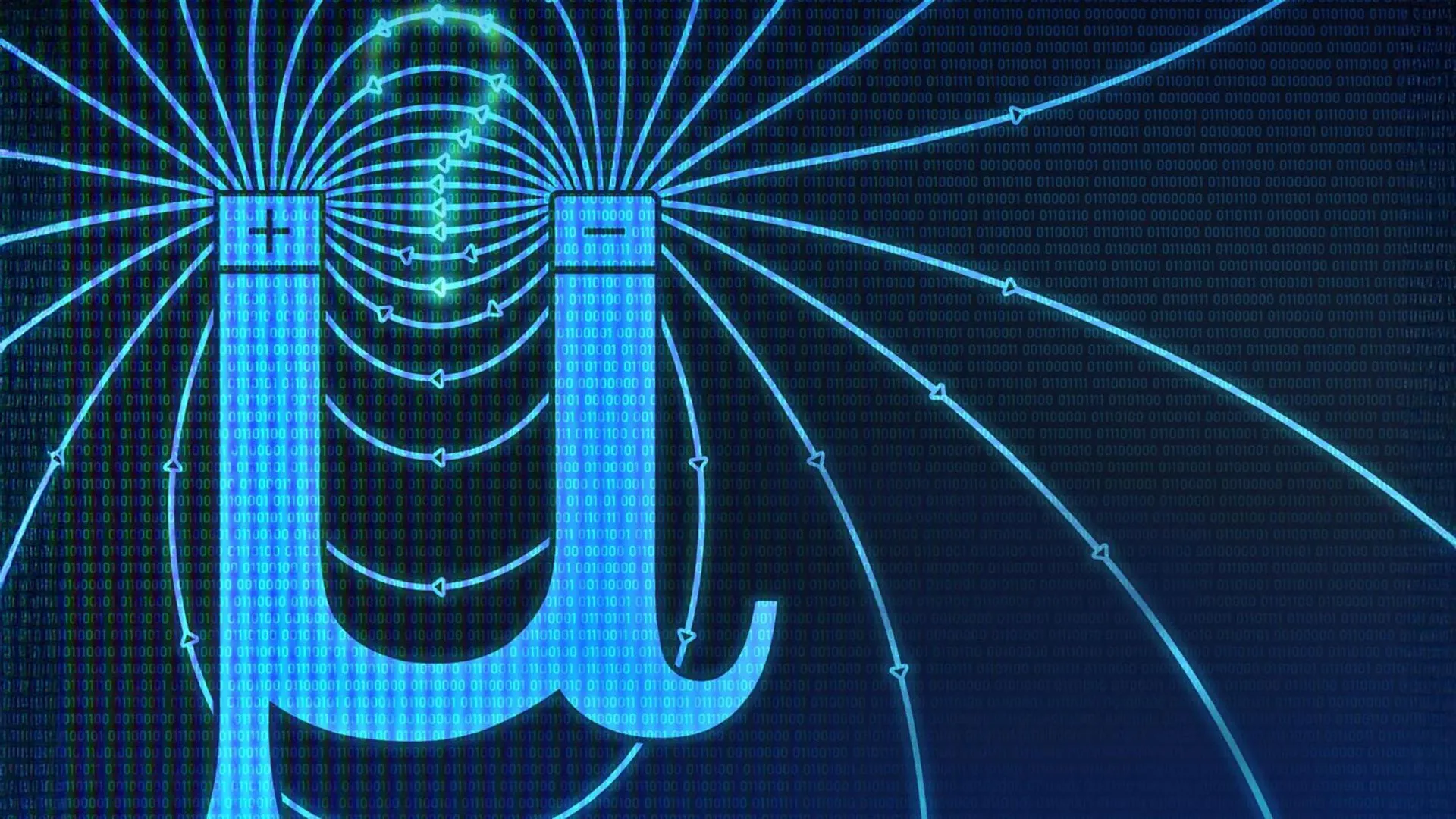
2. The g-2 Experiment: A Precision Marvel
The Muon g-2 experiment at Fermilab represents one of the most precise measurements ever performed. It involved sending muons around a 50-foot-diameter magnetic ring at nearly the speed of light, tracking their spin precession with extraordinary accuracy. The goal was to measure the muon’s magnetic moment with a precision of 0.14 parts per million. After years of data collection and analysis, the experiment reported a value that disagreed with the Standard Model prediction by about 4.2 standard deviations—a tantalizing hint of new physics. But the real story lay in the theoretical side, not the experimental.
3. The Standard Model Prediction: A Tower of Calculations
Predicting the muon’s magnetic moment theoretically is a nightmare of quantum electrodynamics, involving thousands of Feynman diagrams. The calculation includes contributions from virtual particles—everything from electrons to quarks to the Higgs boson. The most challenging part is the hadronic contribution, which involves the strong force and cannot be computed from first principles. Instead, physicists used experiments with electron-positron collisions to derive empirical data. That’s where the trouble began: different groups derived different results, and one key estimate turned out to be flawed.
4. The Anomaly Was a Calculation Error
In April 2021, a team at the University of Würzburg and other institutions announced a revised calculation using lattice quantum chromodynamics (QCD). They ran simulations on supercomputers for years, only to find that earlier estimates of the hadronic contribution were off. The correct value brought the theoretical prediction much closer to the experimental measurement—essentially eliminating the discrepancy. The “rule-breaking” particle behavior was nothing more than a mathematical mistake. The Standard Model, once again, stood its ground.
5. Lattice QCD: The Digital Microscope
Lattice QCD treats spacetime as a four-dimensional grid of points, allowing physicists to simulate the strong force interactions of quarks and gluons numerically. This approach is computationally brutal, requiring thousands of hours on the world’s top supercomputers. For the muon g-2, lattice QCD provided an independent way to calculate the hadronic light-by-light scattering contribution—one of the biggest sources of uncertainty. The new lattice result, published in Nature, showed that the prior theoretical value was overestimated by a significant margin. Without lattice QCD, the ghost might have haunted physics for years longer.
6. The Supercomputer That Solved the Puzzle
Computing the lattice QCD correction required the Summit supercomputer at Oak Ridge National Laboratory—one of the fastest in the world. Researchers ran simulations using millions of hours of compute time, modeling the quantum vacuum’s complexity. The breakthrough came when they were able to reduce the statistical and systematic errors to a level that clearly revealed the mistake. Summit’s power made it possible to simulate the strong force with unprecedented precision, turning a suspected new force into a mundane error. It’s a testament to how modern physics often depends as much on computing horsepower as on theory.
7. Why the Muon Mystery Mattered
The muon’s magnetic moment is one of the most precisely measured quantities in physics—and also one of the most precisely predicted. Any real discrepancy would have signaled a crack in the Standard Model, possibly pointing to new particles like leptoquarks, supersymmetric partners, or even a fifth force. The prospect was thrilling: it would have been the first definitive evidence of physics beyond the Standard Model since the discovery of neutrino masses. That’s why the anomaly generated headlines worldwide. Physicists yearned for a revolution, but nature had other plans.
8. The Standard Model: Unshaken, Still Standing
The Standard Model has survived countless assaults—from the Higgs boson discovery to the lack of supersymmetry at the LHC. The muon g-2 correction is the latest in a long line of rescues. Critics sometimes call the Standard Model boring because it keeps predicting correctly, but it’s actually a remarkable testament to human ingenuity. The model successfully describes all known particles and three of the four fundamental forces, with gravity the lone holdout. While physicists hope for cracks, the muon anomaly turned out to be a mirage, reinforcing the model’s extraordinary durability.
9. What’s Next: The Hunt Continues
Despite the correction, the muon g-2 experiment hasn’t finished. New data runs are underway, and the experimental precision will improve further. If any residual discrepancy remains after accounting for the corrected theory, it could still hint at new physics—just a much smaller hint than before. Meanwhile, lattice QCD calculations are being refined, and other experiments (like the Mu2e project) are searching for rare muon processes. The Standard Model may be standing firm, but physicists remain vigilant, ever curious about what might lie beyond.
10. Lessons for Science Communication
The muon anomaly story is a cautionary tale about how science news spreads. Early reports trumpeted a “new force” when the discrepancy was just a few sigma. When the calculation error was discovered, the narrative flipped—but not many headlines cheered. The episode underscores the importance of reproducibility and caution in interpreting statistical signals. It also shows how theoretical uncertainty can be underestimated. For the public, it’s a reminder that science is a process, not a declaration. The truth evolves, and today’s anomaly can become tomorrow’s footnote—or tomorrow’s revolution.
In the end, the muon’s magnetic moment remains a precision frontier. The correction hasn’t closed the book—it has simply removed a false chapter. Physicists are now left with a more refined challenge: to measure and calculate ever more accurately, waiting patiently for a genuine crack in the Standard Model. Until then, the muon will keep spinning, but the ghost of a new force has been laid to rest.